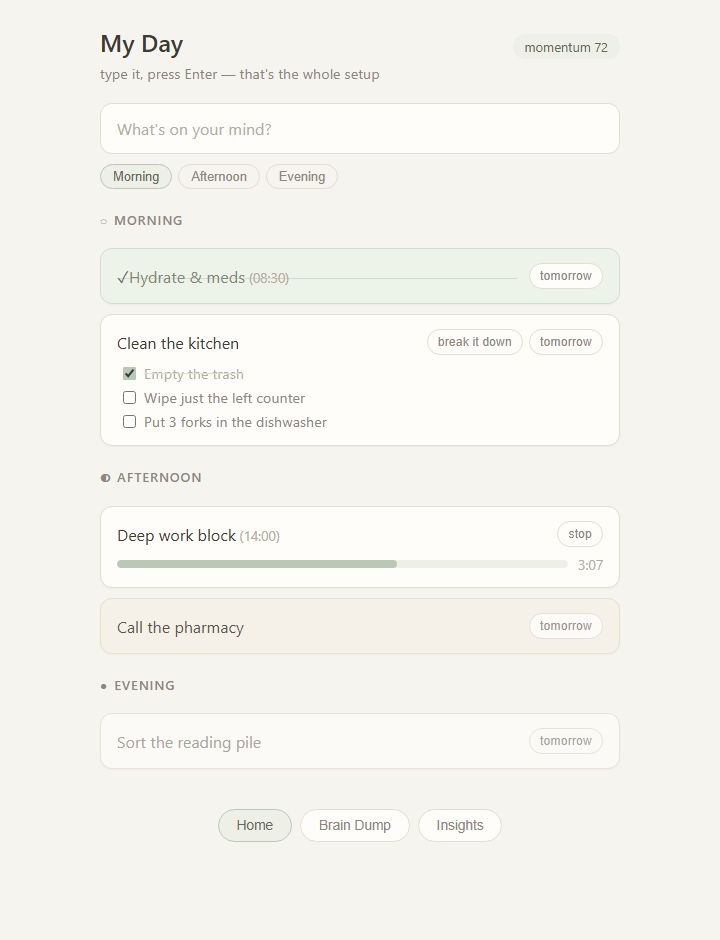
No failed. No overdue. No missed.

Local-first day planner
Most trackers are scorekeepers: miss a day and the streak dies, the square turns red, and the guilt does the rest. Weke Planner has no failure state — not in the interface, not in the database. Tasks move forward, rest, or get tucked away, and the one number it keeps forgives you by design.
The anti-tracker architecture
Softer copy over a harsh model still punishes you. So the model changed first: fluid statuses instead of done-or-failed booleans, waves instead of timestamps you can be late for, and a weighted average instead of a streak that resets to nothing.
Coverage
Get it out of your head, shape it into waves, and let the number average itself out.
Tasks live in morning, afternoon, or evening — a soft clock hint at most, never a deadline you can be late for.
Empty a loud head into one box, then let the on-device engine cut "clean the kitchen" into three steps you can actually start.
One weighted moving average across thirty days. A rough week bends the line; it never wipes it.
How a day goes
There is no onboarding, no project setup, and nothing to configure before the planner is useful. The whole ceremony is one input box.
Getting it
Weke Planner is a Rust workspace you can run right now — cargo run -p app opens the planner and keeps its data in your own app folder. The Windows installer is scripted and rehearsed end to end, but it is not published yet: signed builds wait on a code-signing certificate, and shipping an unsigned one would only teach people to click through warnings.